
HSBC Tax Saver Fund Merger: Your Complete Guide & Options

If you’re an investor in the HSBC Tax Saver Equity Fund, there’s an important change coming.
The fund is merging into the HSBC Flexi Cap Fund effective January 23, 2026, with a 30-day exit window from December 24, 2025, to January 22, 2026, where you can exit without any exit loads.
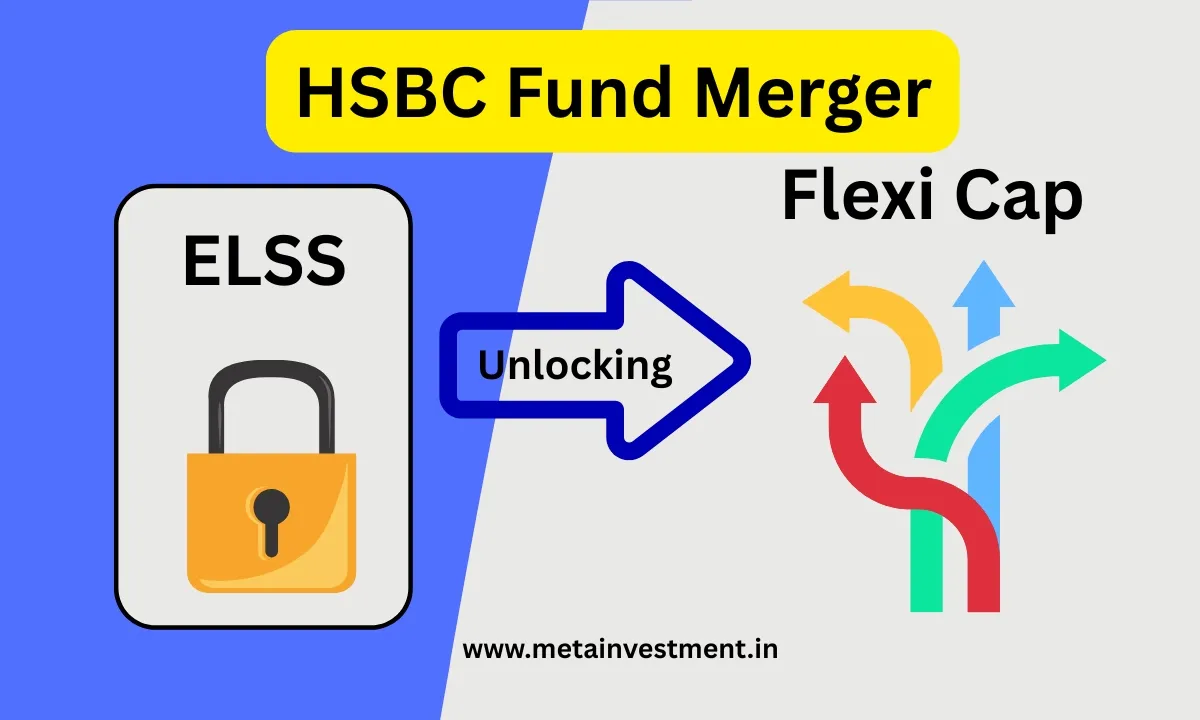
This move marks the end of the ELSS lock-in but preserves your investment value, holding period, and tax benefits if you choose to continue.
Here’s everything you need to know to make an informed decision.
Why Is This Merger Happening?
HSBC Tax Saver Equity Fund was launched in 2007 but stopped accepting fresh subscriptions from November 25, 2022. This was after HSBC acquired L&T Investment Management and consolidated schemes.
SEBI regulations allow only one open-ended ELSS per fund house, and HSBC already offers the HSBC ELSS Tax Saver Fund.
By November 25, 2025, all investors in the Tax Saver Equity Fund had completed the mandatory 3-year lock-in, making the merger timely and avoiding liquidity issues.
Both funds follow a flexi-cap approach—investing across large, mid, and small caps using bottom-up stock selection—ensuring a smooth transition and similar investment philosophy post-merger.
Understanding the Merger in Simple Terms
A mutual fund merger is like combining two family bank accounts into one larger household account.
The total value remains the same, but management moves under a single, streamlined structure.
In this case, HSBC Tax Saver Equity Fund’s assets will move into the larger HSBC Flexi Cap Fund, and the former will cease to exist post-merger.
The merger, approved by SEBI on December 1, 2025, aims to streamline HSBC’s offerings. The smaller AUM of the Tax Saver Fund will benefit from the Flexi Cap Fund’s diversified strategy and scale.
Key Differences Between the Two Funds
| Feature | HSBC Tax Saver Equity Fund (Merging) | HSBC Flexi Cap Fund (Surviving) |
|---|---|---|
| Category | ELSS (Tax-saving) | Flexi Cap |
| Lock-in Period | 3 years (statutory) | None |
| Equity Allocation | 80–100% | 65–100% |
| Debt / Money Market | 0–20% | 0–35% + 0–10% REITs/InvITs |
| Tax Benefit | Section 80C eligible | None |
| Suitability | Tax savers with 3+ year horizon | Flexible equity investors |
Note: Post-merger, the attributes of the Flexi Cap Fund remain unchanged for its existing unitholders.
What Happens to Your ELSS Lock-in Period?
The 3-year statutory lock-in tied to ELSS funds ends completely once the merger takes effect.
Units already past their lock-in become fully redeemable anytime after January 23, 2026, subject only to the Flexi Cap Fund’s standard exit load (1% if redeemed within 12 months).
During the exit window (Dec 24, 2025 – Jan 22, 2026), all Tax Saver units can be redeemed without any exit load.
How Dividend (IDCW) Units Are Handled
If you hold IDCW (Income Distribution cum Capital Withdrawal) units, these will transfer to the corresponding IDCW option in the Flexi Cap Fund—Direct to Direct, Regular to Regular—based on the NAV of the merger date.
Your investment value remains the same.
For example:
- 50 Tax Saver IDCW units at ₹20 NAV = ₹1,000 value
- Post-merger: ~40 Flexi Cap IDCW units at ₹25 NAV = ₹1,000 value
Any systematic withdrawal or transfer plans (SWP/STP) linked to IDCW will continue seamlessly.
Your Choices: Exit or Continue?
✅ Option 1: Exit During the Window
From December 24, 2025, to January 22, 2026 (3 PM), you can redeem or switch your units at the applicable NAV without exit loads.
You can do this via:
- Your Mutual Fund Distributor
- HSBC Mutual Fund app/website
- Investor Service Centre (ISC)
- Registrar & Transfer Agent (RTA)
- Demat account (through your DP)
Important: Update your bank and address details at least 10 days before exiting. Proceeds will be credited within 3 working days.
🔄 Option 2: Continue Automatically
If you take no action by the deadline, your units will be automatically allotted into the HSBC Flexi Cap Fund at the applicable NAV.
Your original cost of acquisition and holding period will carry over—making this a tax-neutral transition.
Tax Implications: Redeem Now vs. Continue
📌 Scenario 1: Redeem During Exit Window
- Triggers capital gains.
- Since most ELSS holdings are long-term (>1 year), gains above ₹1.25 lakh/year are taxed at 12.5% (plus cess).
- Your Section 80C benefit (deduction up to ₹1.5 lakh) remains protected unless reassessed by tax authorities.
Example:
Invested ₹1 lakh, current value ₹2.5 lakh (gain = ₹1.5 lakh).
- Exemption on first ₹1.25 lakh gain
- Tax on ₹25,000 @ 12.5% = ₹3,125 + cess ≈ ₹3,250 total tax
📌 Scenario 2: Continue with Merger
- No immediate tax trigger — completely tax-neutral.
- Original cost and holding period carry forward.
- Future redemptions will follow standard LTCG rules (12.5% on equity gains above ₹1.25 lakh/year).
| Tax Aspect | Redeem Now | Continue (Merger) |
|---|---|---|
| Immediate Tax | Yes (if gains > ₹1.25L) | No |
| Cost/Holding Carryover | N/A | Yes |
| LTCG Rate (>₹1.25L) | 12.5% | 12.5% (on future sale) |
| Section 80C Benefit | Retained | Retained |
Why Consider Staying Invested for the Long Term
Long-term equity investing harnesses the power of compounding.
For example, ₹1 lakh growing at 12% CAGR becomes ₹3.1 lakh in 10 years, compared to ₹2.1 lakh at 8% (typical fixed income).
The HSBC Flexi Cap Fund offers dynamic allocation—large caps for stability, mid and small caps for growth—potentially delivering higher returns over market cycles.
Staying invested helps you avoid taxes now and lets your money compound longer.
What Happens to Your SIP/STP/SWP?
All existing systematic plans (SIP, STP, SWP) will automatically migrate to the matching plan and option in the Flexi Cap Fund.
No fresh paperwork is needed if you continue.
If you wish to exit, cancel via the standard process before the deadline.
Action Steps for Investors
- Log in to your HSBC Mutual Fund account (app or portal) and check your folio details.
- Verify bank details and decide whether to exit or continue.
- If exiting, redeem before January 22, 2026, 3 PM.
- Post-merger, monitor your investment under the HSBC Flexi Cap Fund via www.assetmanagement.hsbc.co.in.
Need help?
Call Meta Investment +919309806281 or email info@metainvestment.in.
Final Thoughts
This merger trades the ELSS tax benefit and lock-in for the flexibility and growth potential of a flexi-cap fund.
It’s a suitable move if your investment horizon is longer than 3 years and you’re focused on wealth creation.
Align the decision with your goals:
- Exit if you need liquidity or want to rebalance your portfolio.
- Continue to defer taxes and stay invested for long-term growth.
Mutual fund investments are subject to market risks. Read all scheme-related documents carefully. Past performance is not indicative of future returns.
Sources: HSBC Mutual Fund merger notice, SEBI regulations, and tax provisions under the Income Tax Act, 1961.
Frequently Asked Questions
What is happening to my HSBC Tax Saver Equity Fund?
Your HSBC Tax Saver Equity Fund is merging into the HSBC Flexi Cap Fund effective January 23, 2026. The Tax Saver Fund will cease to exist after this date, and your investment will automatically transfer to the Flexi Cap Fund unless you redeem during the exit window.
When is the exit window, and can I redeem without charges?
The exit window runs from December 24, 2025, to January 22, 2026 (until 3 PM). During this period, you can redeem your units from the Tax Saver Fund at the applicable NAV without any exit loads or charges.
What happens if I take no action by January 22, 2026?
If you take no action, your investment will be automatically transferred to the HSBC Flexi Cap Fund on January 23, 2026. This is a tax-neutral event—your original cost, holding period, and investment value are carried forward seamlessly.
Will I lose my Section 80C tax benefit because of this merger?
No. The Section 80C tax deduction you claimed in previous years remains valid. The merger itself does not trigger any reassessment of past deductions. However, the Flexi Cap Fund does not offer new Section 80C benefits for future investments.
What happens to the 3-year ELSS lock-in after the merger?
The statutory 3-year lock-in period ends completely once the fund merges into the Flexi Cap Fund on January 23, 2026. After this date, all your transferred units can be redeemed at any time, subject to the Flexi Cap Fund's exit load rules (1% if redeemed within 12 months).
How are my dividend (IDCW) units handled in the merger?
Your IDCW units will transfer to the corresponding IDCW option in the Flexi Cap Fund—Direct plans to Direct, Regular plans to Regular. The value remains the same, only the number of units adjusts based on the NAVs on the merger date. Any linked SWP/STP will continue automatically.
What are the tax implications if I redeem during the exit window?
Redeeming triggers capital gains tax. Since ELSS units are typically held for over 1 year, gains above ₹1.25 lakh in a financial year are taxed at 12.5% (plus cess). If you continue with the merger, there is no immediate tax—it's deferred until you eventually sell the Flexi Cap units.
Will my SIP, STP, or SWP continue after the merger?
Yes, all registered systematic plans (SIP, STP, SWP) will automatically migrate to the matching plan and option in the Flexi Cap Fund. No re-registration is required if you continue. If you wish to stop them, you must cancel separately before the exit window closes.
How is my cost and holding period calculated after the merger?
Your original purchase price (cost of acquisition) and holding period are fully carried over to the new Flexi Cap units. For example, if you invested 4 years ago, your transferred Flexi Cap units will be considered long-term holdings from day one post-merger.
Where can I check my details or get help with this merger?
Log into the HSBC Mutual Fund portal or app to check your folio and plan details. For assistance, you can call HSBC at 1800-200-2434 or email investor.line@mutualfunds.hsbc.co.in. The official notice and updated SID/KIM are available on their website.

Mutual fund updates, SIP tips, and what's moving the market. No daily noise — only when there's something worth reading.
Read more about
- Arudha SIF offered by Bandhan Mutual Fund
- Meta Investment Appointment Booking
- Diviniti SIF offered by ITI Mutual Fund
- How Bright Can Your Diwali Bonus Shine in 2025? A Data-Backed Guide
- Diwali Investment Myths vs Reality: Insights for Pune’s Urban Investors
- Diwali 2025 Investment Offers - Illuminate Your Financial Future
- Downloads - Meta Investment
- संपत्तीचा उलगडा: ELSS म्युच्युअल फंडांसाठी सर्वसमावेशक मार्गदर्शक
- इक्विटी म्युच्युअल फंड्स - प्रकार, फायदे आणि SEBI श्रेण्या (२०२५)
- Exchange-Traded Funds (ETFs) in India and Globally: A Complete Guide
- FATCA रहस्य उलगडणे: भारतातील म्युच्युअल फंड गुंतवणुकीचा एक महत्त्वाचा पैलू
- Master Your Financial Future with Our Expert-Led Webinars
- फ्लोटिंग रेट फंड्स म्हणजे काय? भारतीय गुंतवणूकदारांसाठी अर्थ, कार्यपद्धती, धोका आणि कामगिरी समजावली
- गोल्ड आणि सिल्व्हर ETF आणि इंडेक्स फंड - भारतातील फायदे, धोके आणि गुंतवणूक कशी करावी
- Diwali 2025 Gold MLD Investment | Principal Protection & Growth for Pune Investors
- तुमच्या आर्थिक ध्येयांसाठी योग्य SIP प्लॅन कसा निवडावा | भारतातील स्मार्ट SIP गुंतवणूक
- तुमची पहिली ₹100 SIP (छोटी SIP) कशी सुरू करावी: स्टेप-बाय-स्टेप गाईड (2026)
- तुमची पहिली ₹1,000 SIP कशी सुरू करावी: नवीन गुंतवणूकदारांसाठी स्टेप-बाय-स्टेप गाईड (2026)
- तुमची पहिली ₹500 SIP कशी सुरू करावी: नवीन गुंतवणूकदारांसाठी संपूर्ण गाईड (2026)
- तुमची पहिली ₹5,000 SIP कशी सुरू करावी: संपूर्ण स्टेप-बाय-स्टेप गाईड (2026)
- हायब्रिड म्युच्युअल फंड
- इंडेक्स म्युच्युअल फंड: भारतीय गुंतवणूकदारांसाठी स्मार्ट, किफायतशीर गुंतवणूक
- Mutual Fund, NPS & Financial Planning Services in Baner, Pune
- Mutual Fund & Financial Planning Services in Balewadi, Pune
- Mutual Fund & Financial Planning Services in Chinchwad, Pune
- Mutual Fund & Financial Planning Services in Hingewadi, Pune
- Mutual Fund Distributor & Financial Planner in Pimple Saudagar, Pune
- Mutual Fund & Financial Planning Services in Sambhaji Nagar, Pimpri Chinchwad
- Mutual Fund & Financial Planning Services in Pimpri Chinchwad, Pune
- Mutual Fund & Financial Planning Services in Rahatani, Pune
- Mutual Fund & Financial Planning Services in Wakad, Pune
- Mutual Fund Distributor & Financial Planner in Pune
- iSIF SIF offered by ICICI Prudential Mutual Fund
- ISIN
- लिक्विड म्युच्युअल फंड्स: भारतीय गुंतवणूकदारांसाठी एक सोपे मार्गदर्शक
- म्युच्युअल फंड्सचे वर्गीकरण आणि योजनांचे प्रकार: एक संपूर्ण मार्गदर्शक
- Samvat 2082 Muhurat Picks
- म्युच्युअल फंड्सचा इतिहास
- Mutual Fund Transmission Process in India (2026): Nominee & Legal Heir Claims After Death
- म्युच्युअल फंड भारतात 2026: प्रकार, SIP परतावा आणि निवड मार्गदर्शिका
- म्युच्युअल फंडातील नॉमिनीचे महत्त्व - तुमचा गुंतवणूक वारसा सुरक्षित करणे
- NPS वि. म्युच्युअल फंड्स: भारतात निवृत्तीसाठी कोणते चांगले? (2026)
- Diwali 2025 Investment Offers - Available Now
- iSIF One-Pager
- qsif SIF offered by Quant Mutual Fund
- Leading Specialized Investment Fund Houses in India
- SIF vs Mutual Fund vs PMS vs AIF: Key Differences, Benefits & Comparison Table
- Specialized Investment Funds (SIFs)
- SIP in Digital Gold and Silver: Celebrate Diwali Dhanteras with Smart Investing in 2025
- म्युच्युअल फंड मधील SIP म्हणजे काय? फायदे, काम करण्याची पद्धत (२०२५)
- २०२५ साठी भारतातील सर्वोत्तम कर बचत पर्याय | सेक्शन ८०सी आणि इतर
- Top 5 Diwali Investment Gifts for Your Loved Ones in Pimple Saudagar
- म्युच्युअल फंडातील एकूण खर्च गुणोत्तर (TER)
- Ye Diwali Goal SIP Wali